Drag-and-drop calendar
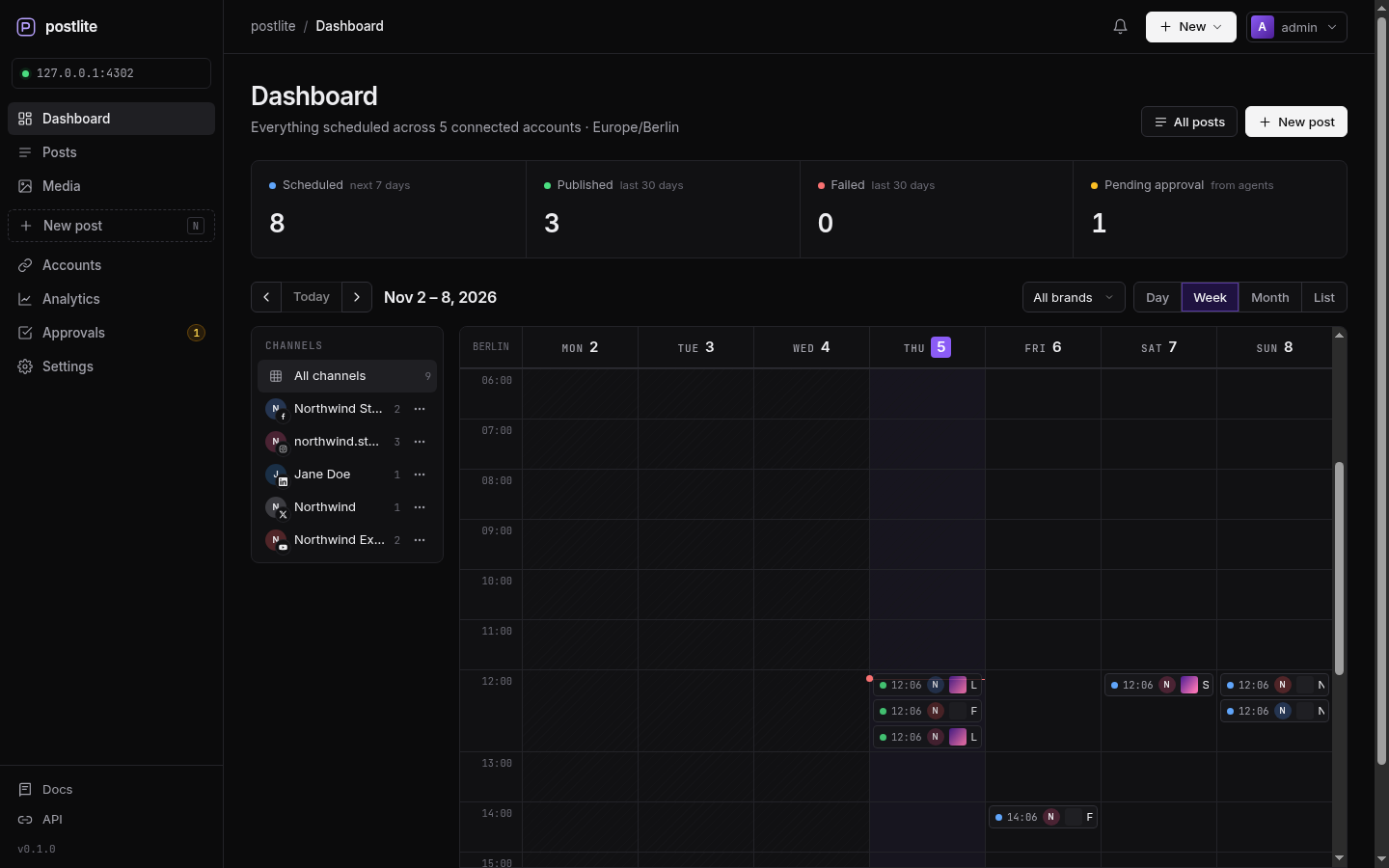
Day, week, month and list views. Drag a post to reschedule it. Filter everything by brand.
postlite is a self-hosted scheduler for YouTube, Facebook, Instagram, LinkedIn and X. One Node process and a SQLite file, or Cloudflare's free plan. Drive it from the web, REST, MCP or the command line.
Publishes to
One caption with per-channel overrides, checked against every platform's limits as you type. A post fails when you write it, not when it's due.
Calendar, brands, approvals, analytics, a media library and alerts, in about 70 MB of RAM.
Day, week, month and list views. Drag a post to reschedule it. Filter everything by brand.
Posts from approval-mode API keys wait for a person. Try it.
Named sets of channels. Pick a brand, get every channel it owns.
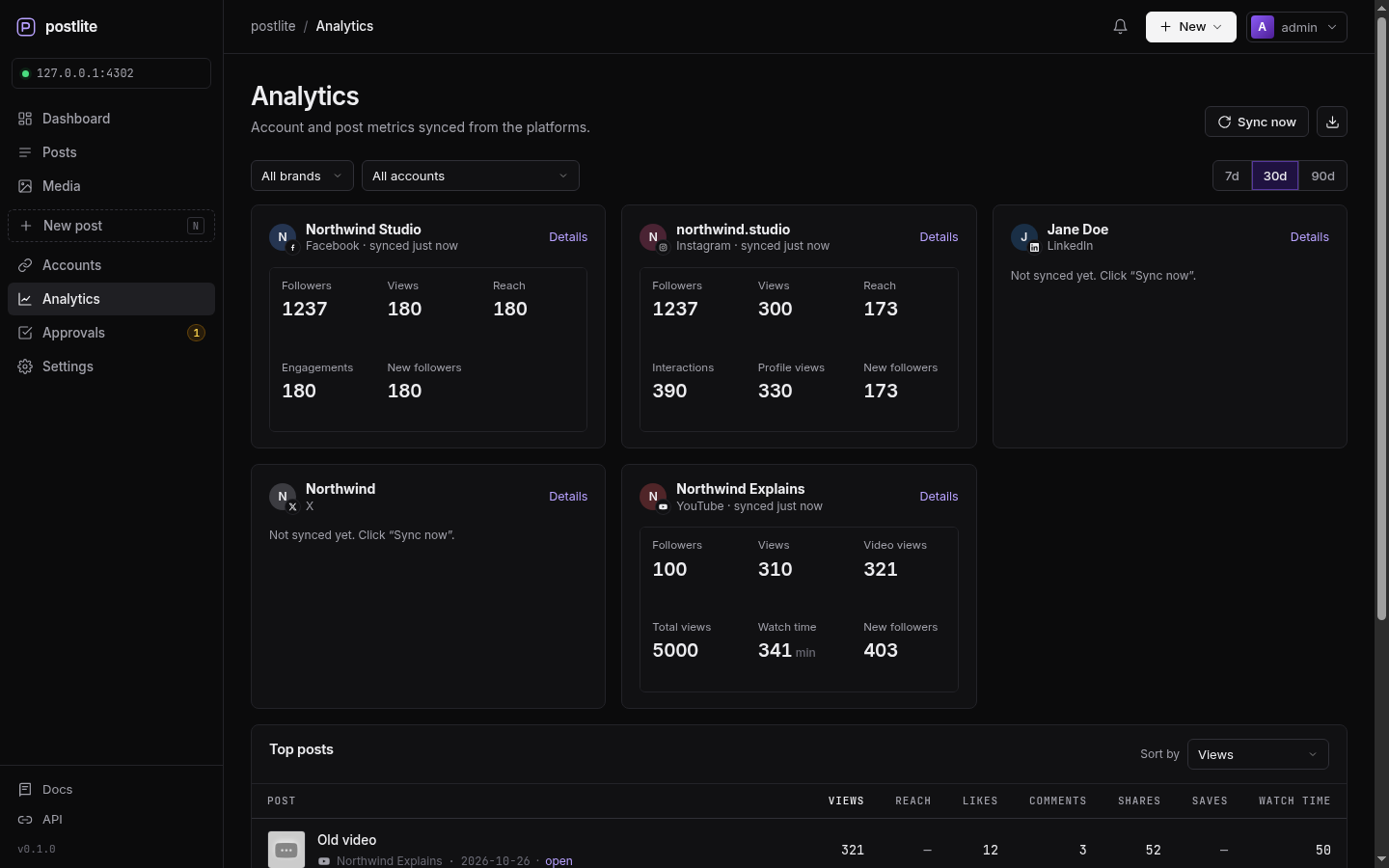
Followers, views, reach and engagement per account and post. Top posts, CSV export.
Drop a post in the next free slot, or repeat it daily, weekly or monthly.
Resumable uploads. Originals can be cleaned up after publishing (after a safety window, 7 or 30 days, or never). Thumbnails and links stay.
Failed posts, accounts that need reconnecting, published posts and a daily digest. Email via SMTP or Resend. Each person picks what they get.
With Cloudflare Access sign-in, every allowed email gets its own workspace: accounts, posts, media, analytics, keys, webhooks and audit log.
Threads, first comments, carousels, Reels, Stories, Shorts and LinkedIn documents. Previews for each.
A versioned REST API, an MCP server and a CLI, all with the same reach as the web UI. Scoped keys and an audit log keep you in charge.
Versioned at /api/v1, with the spec at /api/v1/openapi.json.
Ready-made configs for Claude Desktop, Claude Code, Cursor and Hermes.
Works the same against Node and Workers instances, and can upload local files.
New keys start in approval mode. They can't approve posts, raise their own permissions or touch app credentials.
llms.txtEvery change is recorded. The agent guide is served at /AGENTS.md.
// .mcp.json (Claude Code)
{
  "mcpServers": {
    "postlite": {
      "type": "http",
      "url": "https://social.example.com/mcp",
      "headers": {
        "Authorization": "Bearer ${POSTLITE_API_KEY}"
      }
    }
  }
}

# or run it locally over stdio
$ POSTLITE_URL=https://social.example.com \
  POSTLITE_API_KEY=pl_••••••• node bin/postlite.js mcp
# create an API key (starts in approval mode)
$ node bin/postlite.js keys create --name "Claude"

# schedule into the next free slot for a brand
$ node bin/postlite.js posts create \
    --content "Hello from the terminal 👋" \
    --brand Northwind --next-slot \
    --url https://social.example.com --key $KEY

✓ created post 7f3a…c21d
  status     pending_approval
  scheduled  Thu Nov 5, 12:06 Europe/Berlin
  channels   youtube · instagram · facebook · x
$ curl https://social.example.com/api/v1/posts \
    -H "Authorization: Bearer $KEY" \
    -H "Content-Type: application/json" \
    -d '{
      "content": "Swipe through: four tools we use every day",
      "brand": "Northwind",
      "next_slot": true
    }'

# full schema
$ curl https://social.example.com/api/v1/openapi.json

# docs written for agents
$ curl https://social.example.com/llms.txt
Every publish is a small, durable state machine. A crash mid-upload won't double-post.
Exactly one worker takes each job, so nothing runs twice.
Each publish step is saved as it completes.
Before retrying, it asks the platform whether the post already went out.
Transient failures retry with backoff, then alert you.
Posts missed while the server was down still go out.
The Node and Cloudflare builds share the same code. Pick what fits and switch later.
$ git clone https://github.com/muhammedilyasy/postlite.git && cd postlite
$ cp .env.example .env
$ node bin/postlite.js gen-secrets   # into .env
$ node bin/postlite.js set-password
$ node bin/postlite.js start         # :4100
$ npm install && npx wrangler login
$ npx wrangler r2 bucket create postlite-media
$ npm run cf:deploy
$ openssl rand -base64 32 | npx wrangler secret put TOKEN_ENC_KEY
$ openssl rand -base64 32 | npx wrangler secret put SESSION_SECRET
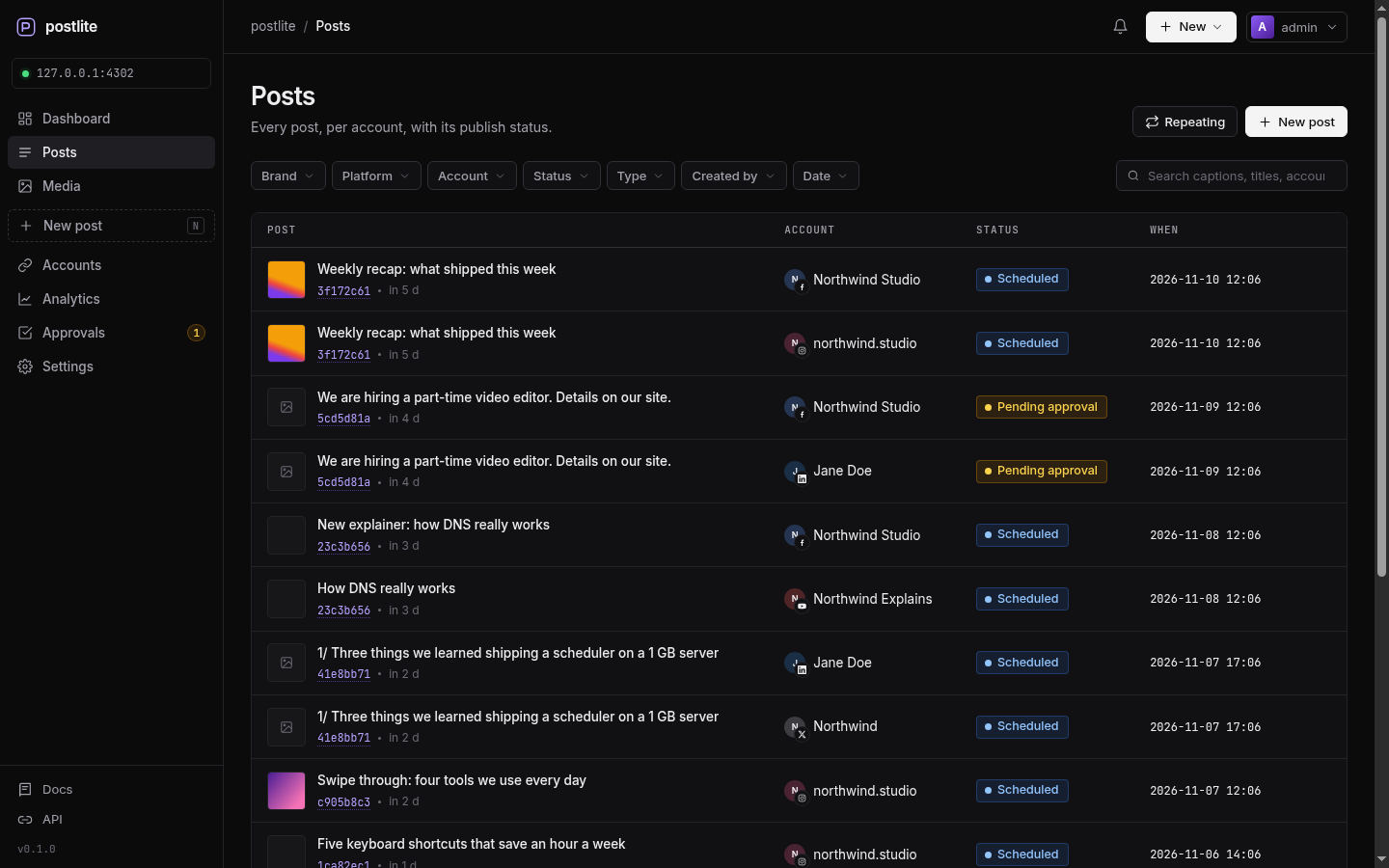
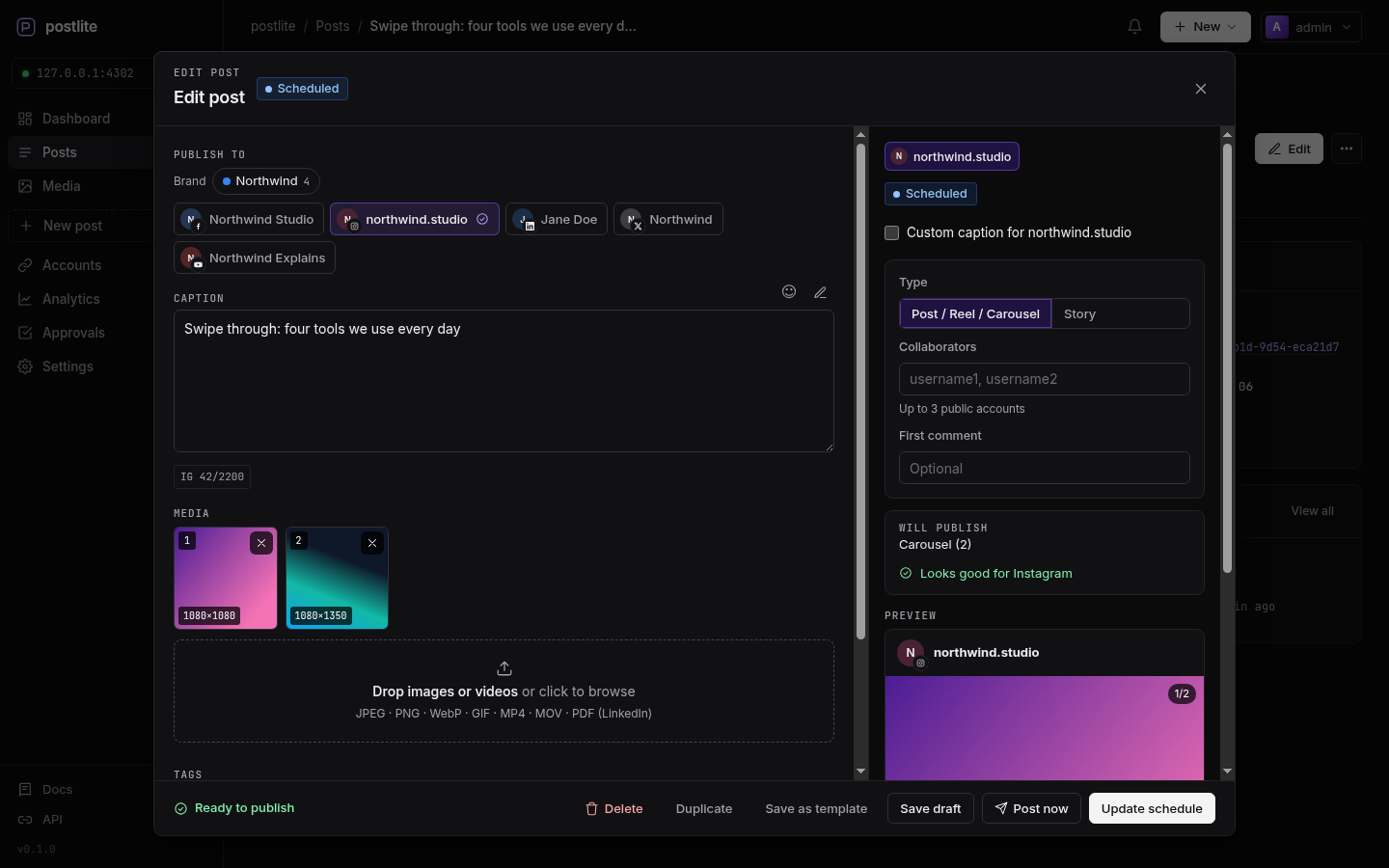
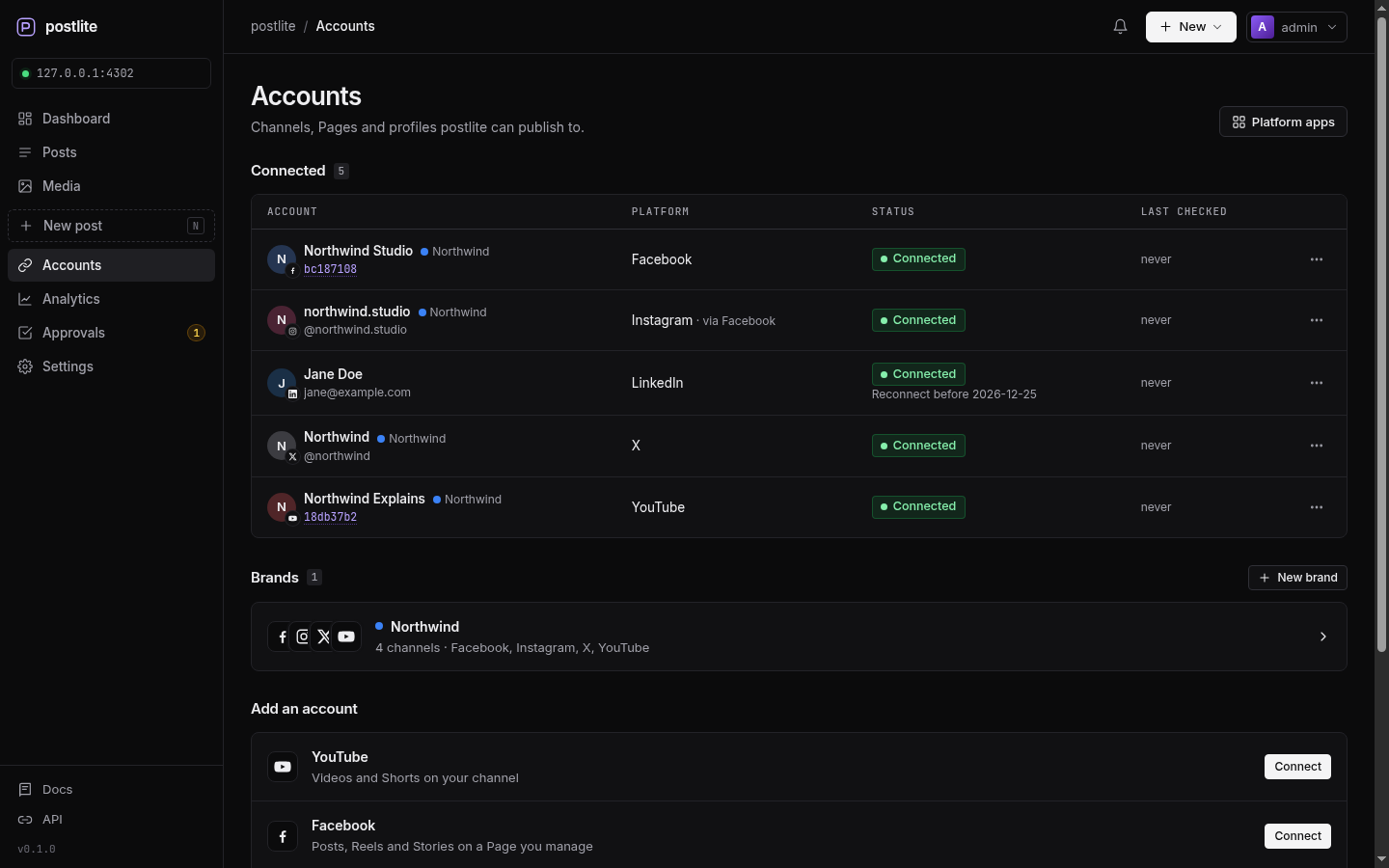
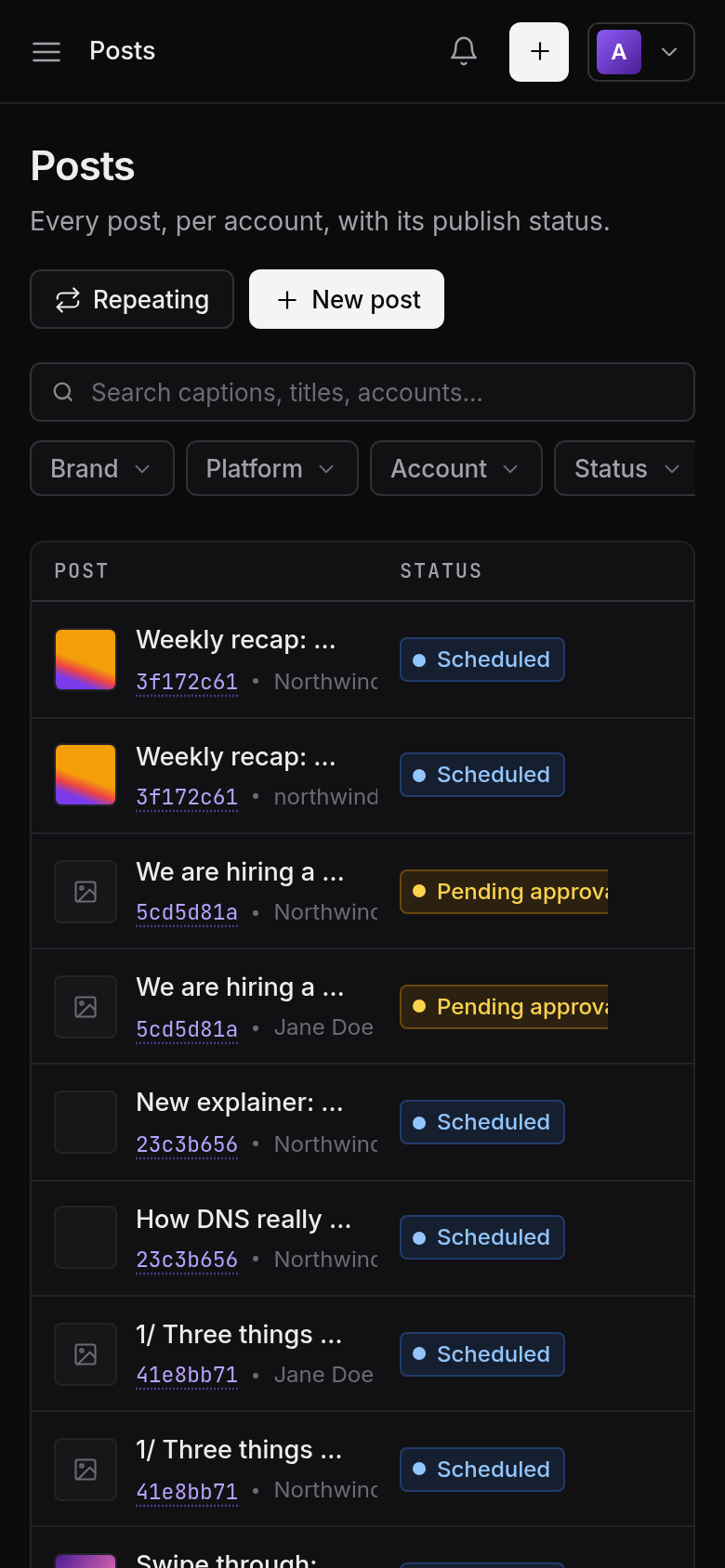
Week calendar with scheduled posts across five channels.
postlite publishes through developer apps you create on each platform. Credentials are stored encrypted, and your instance shows you the exact redirect URIs.
On Node, about 70 MB of RAM at idle and around 105 MB at peak while uploading a video, with Node.js 22.13 or newer. On Cloudflare it fits the free plan for personal use: Workers, D1, and R2's 10 GB of free storage.
The platforms set them. YouTube uploads use a daily API quota, Instagram allows 100 API-published posts per account in 24 hours, X bills every request, and LinkedIn tokens expire after 60 days unless your app is an approved partner. postlite checks media and caption rules before scheduling.
Not yet. Each person gets their own workspace, and a page or channel can be connected in only one workspace at a time. There are no roles or shared workspaces yet.
The test suite runs against local fake servers for every platform and never calls Meta, Google, X or LinkedIn. Try each platform with your own app before you rely on it.
The Instagram API only accepts JPEG images. postlite tells you before scheduling rather than converting the file.
With a password (one owner workspace), or with Cloudflare Zero Trust Access and email one-time PINs. postlite verifies the Access token itself and only admits the addresses in ALLOWED_EMAILS.

Free, open source and yours to run. Set it up in about five minutes.